Building a dream home in Kodaikanal is a major investment. Whether it is a retirement residence, holiday villa or family home, the early choices you make shape its cost, timeline and durability. House construction in Kodaikanal is different from building on flat urban land: slopes, monsoon rain, varying soil and site access all need careful engineering.
As an experienced builder in Kodaikanal, Leo Builders created this guide to help homeowners make sound decisions before construction begins. Use it to reduce avoidable risk and build a home designed for the hills.
Why building in Kodaikanal is different
Every site is influenced by slope, natural water flow, soil conditions, winding-road access, moisture and local approval requirements. A capable building contractor in Kodaikanal accounts for these realities before work starts—not after a problem appears.
1. Choosing a plot without understanding the land
A valley view, price or location alone does not tell you what a site will cost to build on. Two same-size plots can require very different foundations, excavation, retaining walls and drainage.
- Check soil stability, rock formations and slope gradient.
- Map natural water flow and existing drainage.
- Confirm access for construction vehicles and materials.
- Identify the likely foundation and retaining-wall requirements.
Expert tip
Arrange a professional site inspection before finalising a land purchase. A modest upfront assessment can prevent major construction costs later.
2. Selecting the cheapest builder instead of the right builder
The lowest quotation can omit essential work or assume lower-quality materials and shortcuts. Compare scope, engineering standards, supervision, waterproofing, project experience and communication—not only the final price.
Ask whether the contractor has completed similar hill projects, provides a detailed estimate, understands sloped sites and can clearly explain how the home will be built. The right construction company in Kodaikanal manages risk as well as construction.
3. Ignoring soil testing and foundation design
Foundation decisions should come before finish selections. Soil conditions can vary over short distances in the hills; loose soil, filled ground, groundwater movement and rock layers all affect the right design.
Testing helps determine bearing capacity, soil composition, foundation depth, groundwater conditions, drainage needs and slope stability. Skipping it can lead to settlement, cracks, seepage and costly repair work.
4. Underestimating drainage
In Kodaikanal, heavy rainfall means water management must be part of the design from day one. Poor drainage can cause waterlogged foundations, erosion, damp walls, basement seepage, retaining-wall pressure and damaged landscaping.
Plan surface channels, site grading, roof-water discharge and safe outflow routes together. Drainage protects both the building and the land beneath it.
5. Treating retaining walls as decoration
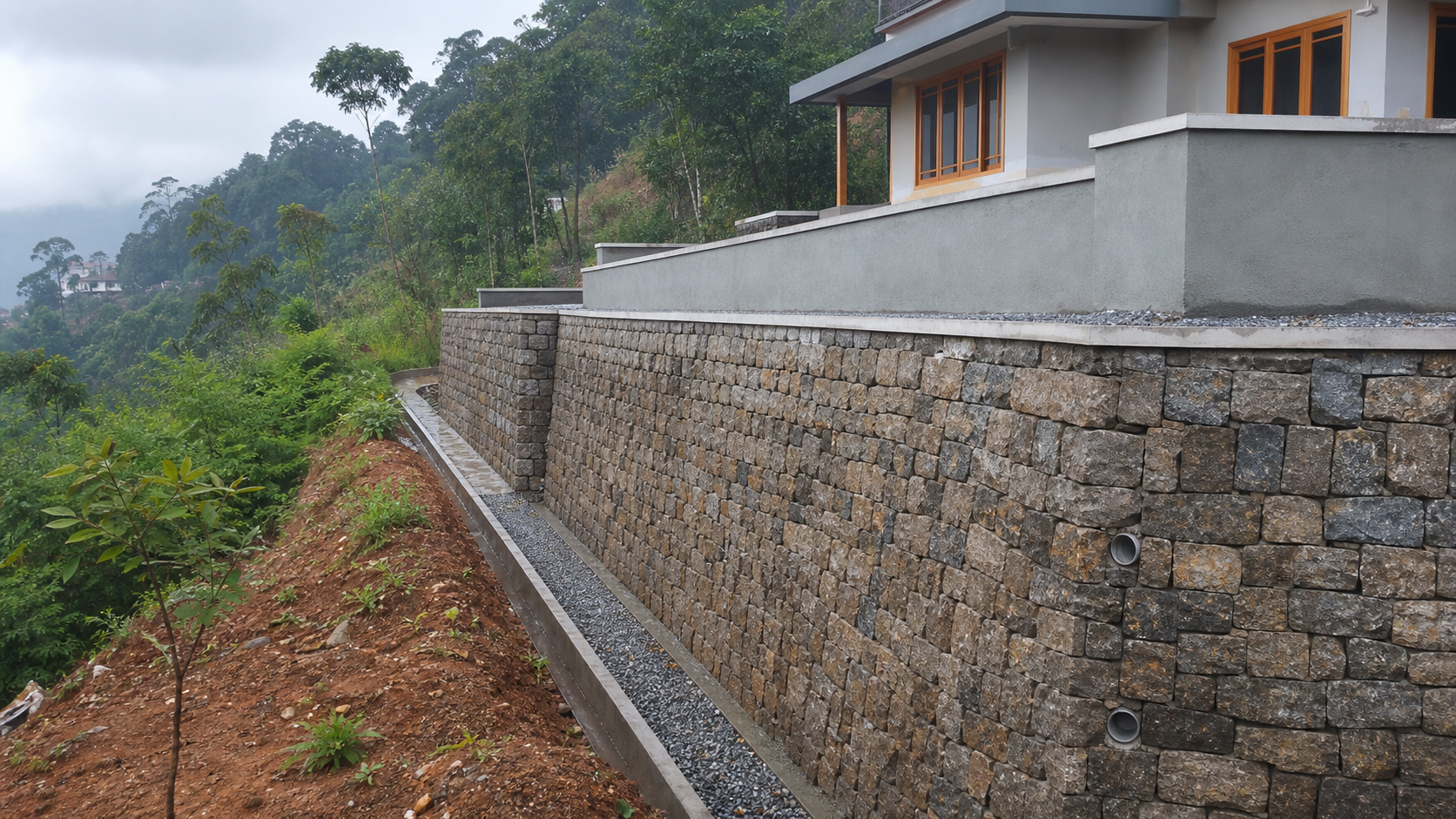
On hillside sites, retaining walls are critical structural elements, not simply landscaping. Their design must consider soil pressure, foundation depth, reinforcement, wall height, loading and drainage behind the wall.
A properly engineered wall preserves usable land, limits erosion and protects foundations during heavy rain. It should be planned by qualified professionals, not added as an afterthought.
6. Not planning for future expansion
A home that meets today's needs may later need a bedroom, office, guest space or accommodation for ageing parents. Where suitable, plan stronger foundations for future floors, reserve expansion space, position stairs thoughtfully and allow plumbing and electrical points for later work.
7. Choosing unsuitable construction materials
Cool temperatures and persistent moisture demand materials that perform well over time. Select reputable cement stored correctly, certified reinforcement steel, suitable masonry, rain-shedding roofing, weather-resistant exterior finishes and reliable waterproof coatings. The cheapest material is rarely the most economical over a building's lifetime.
8. Starting without a realistic budget
Ask for a detailed building estimate in Kodaikanal covering site preparation, excavation, foundations, RCC structure, masonry, roofing, plumbing, electrical work, finishes and external development. Do not forget approvals, utility connections, drainage, compound walls, driveways and landscaping.
Keep a 5–10% contingency so unexpected site conditions do not derail the project.
9. Making waterproofing an afterthought
Effective rainproof house construction begins before the foundation is laid. Include foundation protection, terrace and balcony waterproofing, bathroom treatment, roof detailing, window sealing, expansion joints and exterior wall protection. Waterproofing and drainage work together; neither can fully compensate for the other.
10. Choosing a builder who does not communicate
Good construction also means clear project management. You should know the project stage, materials in use, quality checks, reasons for any delay and changes in cost. Regular updates, milestone inspections and transparent billing create confidence throughout the build.
A practical pre-construction checklist
- Visit the site often and ask questions early.
- Finalise layouts before work begins; late changes cost more.
- Consider sunlight, ventilation, parking and vehicle turning space.
- Prioritise drainage, waterproofing and structural safety.
- Engage architects, structural engineers and experienced contractors.
Frequently asked questions
How much does it cost to build a house in Kodaikanal?
Cost depends on site conditions, design, structural requirements, materials and finishes. Slopes, retaining walls and drainage can increase the investment, so request a detailed estimate before building.
Is soil testing necessary before construction?
Yes. It helps engineers assess bearing capacity and choose a foundation system appropriate for long-term stability.
Can homes be built on steep plots?
Yes, with engineered foundations, retaining walls and drainage systems designed for the specific site.
Why is drainage so important in Kodaikanal?
It helps prevent waterlogging, erosion, dampness, foundation damage and unnecessary maintenance in a high-rainfall environment.
What should I look for in a builder?
Look for local hill-station experience, transparent quotations, engineering knowledge, completed work, quality supervision and clear communication.
Ready to build in Kodaikanal?
For a family home, luxury villa or holiday retreat, Leo Builders brings local knowledge, careful planning and transparent project management to every build.
Explore our complete house construction guide or contact Leo Builders to discuss your site and requirements.
Contact Leo Builders